

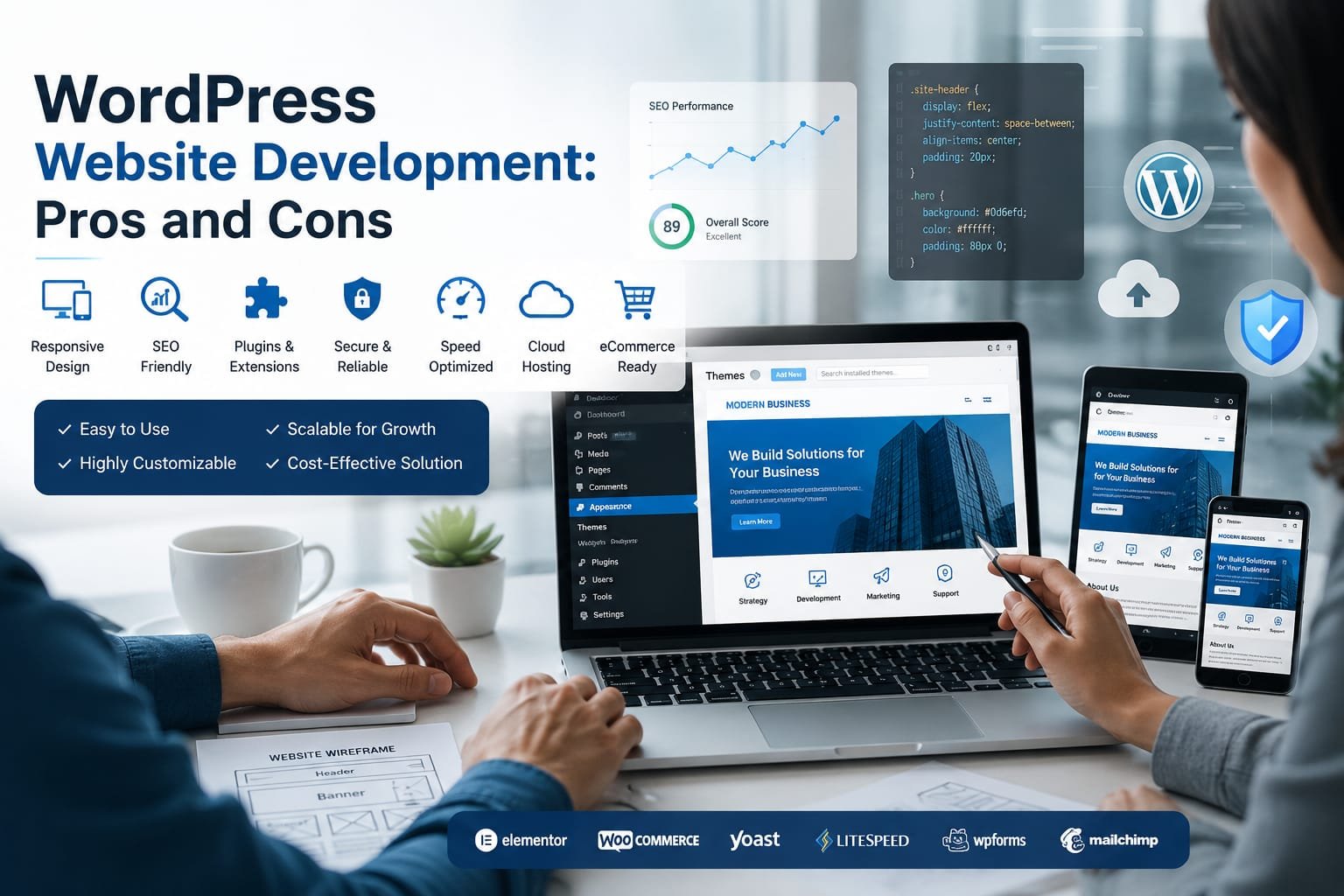
WordPress Website Development: Pros and Cons
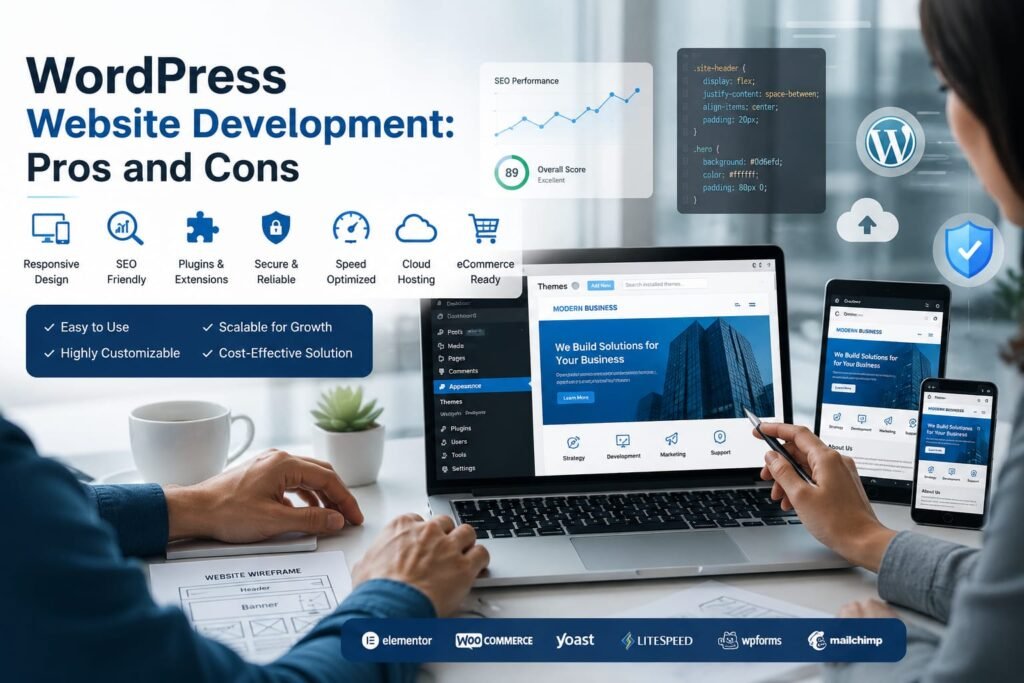
WordPress Website Development: Pros and Cons
A well-designed professional website has become an essential asset for businesses looking to succeed in the modern digital landscape. . Whether you own a startup, an online store, a service-based company, or a personal brand, choosing the right platform is essential for long-term success. One of the most popular options available is WordPress Website Development, a flexible and feature-rich solution trusted by millions of businesses worldwide.
Known for its user-friendly interface and extensive customization options, WordPress Website Development allows organizations to create websites ranging from simple blogs to enterprise-level portals. Despite its popularity and versatility, it has both strengths and potential limitations depending on your website’s needs.
This blog explores the key pros and cons of WordPress Website Development to help you decide whether it is the right platform for your next website.
What Is WordPress Website Development?
WordPress Website Development is the process of creating and managing websites using the WordPress content management system (CMS). Initially launched as a blogging platform, WordPress has evolved into a powerful solution capable of supporting business websites, e-commerce stores, educational portals, portfolios, and corporate platforms.
Its open-source architecture and extensive library of themes and plugins make it a preferred choice for businesses seeking flexibility without excessive development costs.
Advantages of WordPress Website Development
1. Easy to Use
One of the biggest strengths of WordPress Website Development is its simple and intuitive dashboard. Even users with minimal technical experience can create pages, publish articles, upload images, and update content without relying on developers for every change.
This ease of management saves both time and operational costs.
2. Cost-Effective Website Solution
WordPress Website Development is a popular choice for businesses seeking an economical solution, offering free core functionality along with thousands of reasonably priced customization options.
Instead of building every feature from scratch, companies can leverage existing tools to launch professional websites quickly and economically.
3. Flexible Customization
Every business has unique branding and functionality requirements. WordPress Website Development supports extensive customization through themes, plugins, and custom coding.
Features such as appointment booking, contact forms, ecommerce functionality, multilingual support, membership portals, and learning management systems can all be integrated with relative ease.
4. SEO-Friendly Architecture
Search engine visibility plays an essential role in attracting customers online. WordPress Website Development includes features that support search engine optimization, such as customizable URLs, metadata, image optimization, structured content, and SEO plugins.
These capabilities help improve website rankings and increase organic traffic.
5. Mobile Responsiveness
Modern users access websites from smartphones, tablets, and desktops. Most themes used in WordPress Website Development are responsive by design, ensuring an excellent browsing experience across devices.
Mobile-friendly websites also perform better in search engine rankings and improve user engagement.
6. Thousands of Plugins Available
One of the major reasons businesses choose WordPress Website Development is its extensive plugin ecosystem.
Popular plugin categories include:
- SEO optimization
- Contact forms
- Ecommerce functionality
- Website security
- Social media integration
- Email marketing
- Performance optimization
- Backup management
These plugins allow businesses to expand website functionality without extensive coding.
7. Strong Community Support
Because WordPress is widely used around the world, businesses benefit from a large global community of developers, designers, and educators.
Tutorials, documentation, forums, and professional support services make troubleshooting and learning much easier compared to proprietary platforms.
8. Scalable for Growing Businesses
Many businesses start with a simple informational website and later add blogs, online stores, customer portals, or booking systems.
WordPress Website Development supports gradual expansion without requiring a complete rebuild, making it an ideal solution for long-term growth.
Disadvantages of WordPress Website Development
1. Requires Regular Maintenance
Like any software platform, WordPress requires ongoing maintenance. Core updates, plugin updates, and theme updates must be installed regularly to maintain security and compatibility.
Without proper maintenance, websites may become vulnerable to technical issues or cyber threats.
2. Plugin Compatibility Challenges
Although plugins add valuable functionality, installing too many or choosing poorly maintained plugins can lead to conflicts and performance problems.
Businesses should carefully evaluate plugin quality before integrating them into their websites.
3. Security Depends on Proper Management
The popularity of WordPress Website Development makes it an attractive target for hackers. However, most security risks can be minimized through proper management practices.
Recommended security measures include:
- Strong passwords
- SSL certificates
- Security plugins
- Routine updates
- Regular backups
- Trusted hosting providers
Following these best practices helps maintain a secure website environment.
4. Performance Optimization Is Essential
Website speed depends on multiple factors, including hosting quality, theme selection, image optimization, and plugin usage.
Poor optimization can reduce loading speed and negatively impact user experience. Businesses should optimize images, enable caching, and select reliable hosting providers to maximize performance.
5. Advanced Features May Require Professional Developers
Although WordPress simplifies many tasks, highly customized features and complex integrations may require experienced developers with expertise in PHP, JavaScript, CSS, and database management.
Businesses with specialized requirements should budget for professional development support.
6. Frequent Updates Need Monitoring
The WordPress ecosystem evolves continuously. Updates often introduce security improvements and new functionality but may occasionally create compatibility issues with themes or plugins.
Testing updates before deploying them on live websites is recommended.
Best Practices for Successful WordPress Website Development
To maximize website performance and reliability, businesses should follow these best practices:
- Select high-quality hosting services.
- Install only trusted themes and plugins.
- Keep WordPress and plugins updated.
- Perform regular website backups.
- Optimize website speed and images.
- Implement strong security measures.
- Follow SEO best practices.
- Monitor website performance regularly.
These practices help ensure a stable, secure, and user-friendly website.
Is WordPress the Right Choice?
For most organizations, WordPress Website Development offers an excellent balance between affordability, flexibility, and scalability.
It is particularly well suited for:
- Small businesses
- Corporate websites
- Startups
- Blogs
- Ecommerce stores
- Educational institutions
- Healthcare providers
- Real estate companies
- Professional service firms
Businesses requiring highly specialized enterprise applications may consider custom-built solutions, but for the majority of use cases, WordPress provides an efficient and dependable foundation.
WordPress Website Development continues to be one of the most widely adopted website solutions because it combines ease of use, customization, SEO capabilities, and scalability in a single platform. Its extensive ecosystem allows businesses to create professional websites while controlling development costs and adapting to changing needs.
At the same time, users should understand the importance of regular maintenance, security management, and performance optimization to keep their websites running smoothly.
By carefully weighing the advantages and disadvantages, businesses can determine whether WordPress Website Development is the right choice for their goals and create a website that supports long-term digital success.

Author